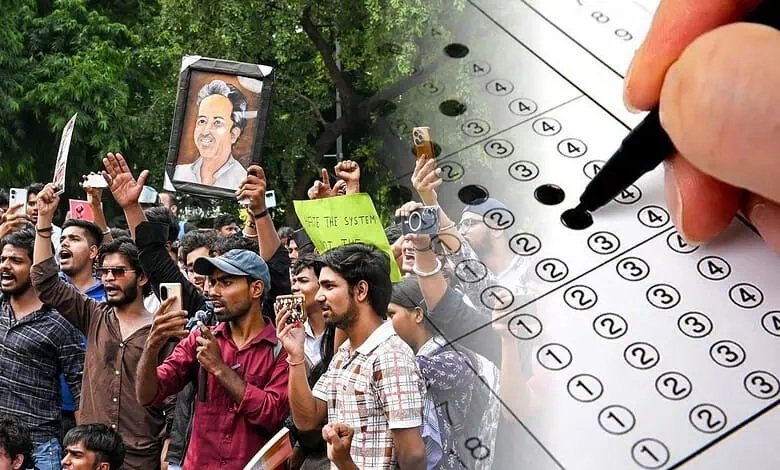

India's plans to strengthen the National Eligibility-cum-Entrance Test for Undergraduate (NEET-UG) are bringing technology to the centre of the debate over examination security. Following the 2026 question-paper leak controversy and the cancellation of the examination, policymakers are examining whether computer-based testing, secure digital question banks and artificial intelligence can make high-stakes entrance examinations more reliable.
A major proposal involves replacing advance preparation of a single fixed question paper with a secure repository of questions from which examination papers could be assembled shortly before the test. The reforms are being examined by a high-powered task force led by Infosys co-founder Nandan Nilekani. The proposals aim to reduce the possibility of leaks while improving the transparency and reliability of the examination process. >
However, moving examinations online will not automatically eliminate malpractice. It will also introduce new technical and operational risks that authorities must address before implementing changes at NEET's national scale.
Can Computer-Based Testing Improve Examination Security?
Under the proposed shift, candidates would take NEET on computers instead of receiving printed question papers and marking answers on optical mark recognition (OMR) sheets.
CBT could reduce vulnerabilities associated with printing, transporting, storing and distributing physical question papers. It could also support encrypted question delivery, digital monitoring and more controlled access to examination materials.
The government has been working on a national CBT infrastructure strategy to support the proposed transition. A parliamentary committee has recommended that the shift be accompanied by investment in secure, government-owned examination centres, particularly in rural areas and smaller cities. It has also called for mock tests and transparent score normalisation if the examination is conducted across multiple sessions.
Yet CBT introduces its own risks. Hacking, unauthorised remote access, software vulnerabilities and disruptions at examination centres could affect the integrity of the test. The security of the entire digital process would therefore matter as much as the examination interface candidates see.
Question Vaults and Last-Minute Paper Generation
One of the proposals under consideration is a secure question vault containing a large pool of questions prepared and vetted by subject experts throughout the year.
Instead of preparing one complete paper well in advance, the system would select questions from the repository shortly before the examination. This could reduce the number of people who know the final combination of questions and limit opportunities for advance disclosure.
The task force has also explored whether AI could assist in generating examination papers. However, AI-generated questions would still require expert validation to ensure that they are scientifically accurate, appropriately difficult, aligned with the syllabus and free from ambiguity.
A digital question bank would also need safeguards against unauthorised access, copying, manipulation and leaks during question creation, translation and review. If its security is compromised, a large repository could itself become a significant vulnerability.
The Risks of Depending on Technology and Vendors
CBT examinations rely on several interconnected systems, including examination software, servers, computer hardware, networks and centre-level operations. Each stage creates potential points of failure.
Dependence on third-party software providers and examination-centre operators could complicate accountability if a security breach occurs. Authorities would need clear responsibilities, independent audits, access controls and detailed records of who handled examination material.
Cybersecurity cannot be treated as a one-time installation. Systems require continuous monitoring, regular testing and a dedicated technical team capable of identifying and responding to emerging threats.
The transition would also require reliable contingency plans for power failures, connectivity problems, server outages and other disruptions on examination day.
Will Every NEET Aspirant Have Equal Access?
NEET is taken by candidates from different economic backgrounds and geographical locations. While many students are familiar with digital devices, access to computers and experience with timed online examinations can vary considerably.
Students in remote areas may face longer journeys to examination centres if government-backed infrastructure is insufficient. Those unfamiliar with CBT could also be disadvantaged if they do not receive adequate opportunities to practise.
A parliamentary committee has therefore recommended expanding government-owned testing facilities, including centres in smaller cities and rural districts, alongside mock examinations to familiarise students with the format. It has also suggested a hybrid approach in areas where adequate digital infrastructure is not yet available.
Ensuring equitable access will be essential if technology-led reforms are to improve examination integrity without creating new barriers for candidates.
Security Must Extend Beyond the Exam Hall
The proposed reforms could help reduce some vulnerabilities in India's entrance examination system, but their success will depend on implementation rather than technology alone.
Secure question banks, carefully validated AI tools, independent cybersecurity audits, reliable examination centres and transparent procedures must work together. Authorities will also need to communicate clearly with students about the format, scoring methodology and contingency arrangements before any transition.
Ultimately, the challenge is not simply to digitise NEET-UG. It is to build an examination system in which question papers remain secure, candidates receive fair treatment and every technical failure has a clear response mechanism.