
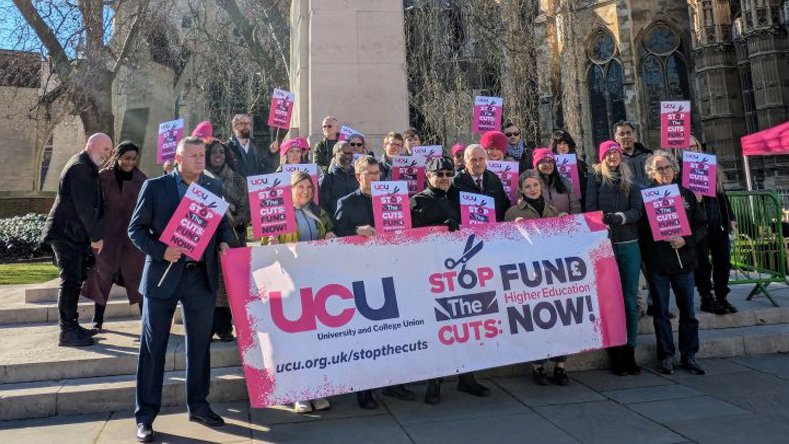
The UK’s higher education sector is facing mounting financial pressure, with universities announcing job cuts and restructuring measures as they struggle to balance their budgets. Against this backdrop, members of the University and College Union (UCU) are seeking a stronger national response, arguing that the government’s higher education funding model is contributing to the crisis.
At a special higher education sector conference held on October 14, delegates voted in favour of a motion calling for a dispute with the secretary of state for education, currently Lucy Powell. The proposal also called for a consultative ballot to gauge members’ willingness to participate in national industrial action. However, the move has reopened disagreements within the union over whether the strategy is legally viable and likely to protect university jobs.
Why UCU Members Want to Challenge the Education Secretary
UCU members argue that university financial difficulties cannot be addressed through individual campus-level negotiations alone. They contend that the funding framework for higher education in England is a central factor behind redundancies, pressure on staff working conditions and uncertainty over the future of public universities.
The union has previously supported motions calling for a dispute with the education secretary. However, progress stalled amid internal discussions and legal advice about whether the proposed action would qualify as a lawful trade dispute.
More than 20 UCU branches subsequently requested a special sector conference to revisit the strategy. Delegates at the October meeting backed a renewed push, arguing that a coordinated national campaign is needed to defend jobs, pay and working conditions, as well as the long-term sustainability of higher education.
Supporters believe that focusing on the government's role in university funding could create greater pressure for systemic reform than pursuing separate disputes at individual institutions.
Legal Advice Raises Concerns Over Industrial Action
The renewed proposal faces a significant obstacle: legal advice obtained by the union concluded that a dispute with the education secretary specifically intended to address university redundancies would not be possible under current law.
The advice reportedly distinguished between action seeking additional funding to support pay increases and action intended to prevent job losses. While a dispute over funding linked to improved pay might be legally possible, it would not necessarily address the redundancy crisis that prompted the campaign.
The advice also warned that communications during any dispute would need to be carefully controlled to prevent the campaign from being classified as political rather than industrial. Under the relevant legal framework, that distinction could determine whether the proposed action is protected.
These concerns have divided union activists. Some argue that the legal risks should not prevent the union from exploring every available route to challenge university cuts. Others caution that asking thousands of members to participate in potentially unlawful action could expose individuals and the organisation to serious consequences.
A Sector Under Financial Pressure
The dispute comes amid wider concerns about the financial health of UK universities. Institutions have announced redundancies, reorganisations and changes to academic provision as they respond to rising costs and financial uncertainty.
For university staff, job security has become a central concern alongside pay and working conditions. UCU members have argued that further cuts could undermine teaching quality, research capacity and student support.
The union has also faced challenges in securing sufficient participation in national industrial action ballots. Earlier efforts to organise action over pay and employment conditions have encountered difficulties, reflecting differences in priorities and levels of support among branches.A national funding dispute could therefore become a test of whether the union can build a common campaign across institutions facing different financial circumstances.
What Happens Next?
The conference vote signals renewed pressure from UCU members for national action, but it does not itself mean that strikes or other industrial action will automatically follow. The union’s higher education committee will need to consider the motion, the legal advice and the practical steps required before proceeding.
A consultative ballot could help establish the level of support among members, while further legal assessment may be necessary to determine whether a viable route exists.
The outcome could have implications beyond the union itself. A sustained national campaign would intensify debate over how universities are funded, who should bear responsibility for sector-wide financial pressures and what protections are needed for staff and students.
Ultimately, the dispute reflects a fundamental disagreement over how to respond to the UK’s university funding crisis: whether national industrial action can force meaningful change, or whether legal constraints make a different strategy necessary.