
The latest Times Higher Education (THE) World University Rankings point to a changing global higher education landscape. Asian universities have resumed their upward trajectory after a pause in the previous edition, with stronger research performance helping the region close the gap with traditional Western university powerhouses.
At the top, however, the established order remains intact. The University of Oxford has retained first place for the 11th consecutive year, but its lead over the Massachusetts Institute of Technology (MIT) has narrowed to just 0.1 points. The results suggest that while the US and UK continue to hold the strongest positions at the top, their dominance is facing increasing pressure from rapidly improving Asian institutions.
Asia Moves Ahead Of Mainland Europe
The clearest signal of change comes from Asia's leading universities.
China's Tsinghua University has moved up to 11th place, overtaking Switzerland's ETH Zurich and becoming the highest-ranked university outside the US and UK. Peking University follows at 13th, while the National University of Singapore (NUS) has climbed two places to 15th.
This means three Asian universities are now inside the global top 15 for the first time. Tsinghua's rise has been linked largely to improvements in international staff and student numbers, while Peking University has also maintained its position near the top.
China's broader performance is also notable. The country now has 17 universities in the top 200, up from 13 in each of the previous three editions. According to THE, 71% of China's top-200 institutions improved their positions this year.
US And UK Retain Their Top-Tier Presence
Despite the shift in the wider rankings landscape, the US and UK remain firmly dominant at the highest level.
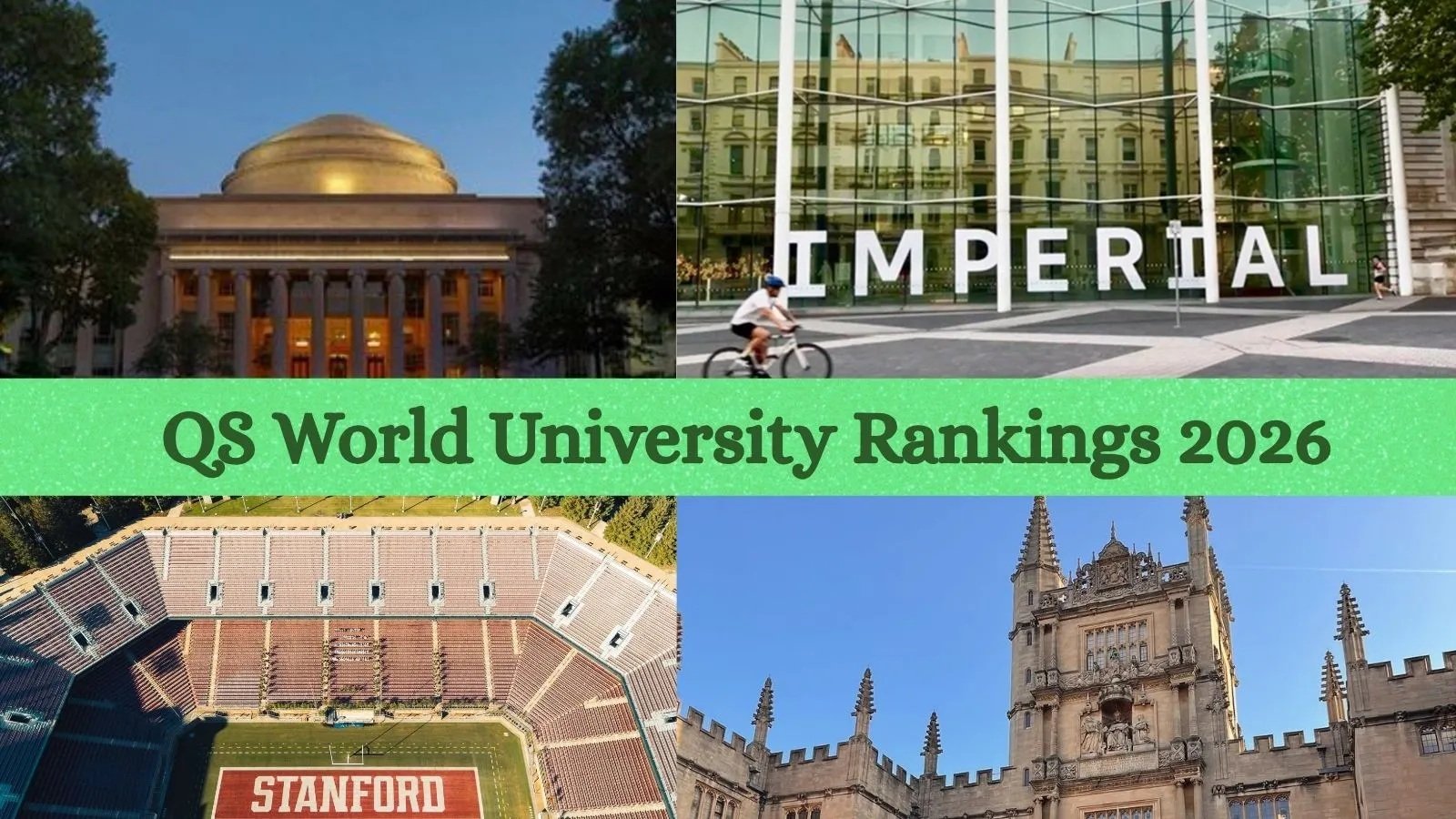
Seven of the top 10 universities are from the United States, while three are from the UK. Oxford remains number one, followed by MIT. Princeton and Stanford are jointly third, while Cambridge is fifth, Harvard sixth, Caltech seventh, Imperial College London eighth, and Yale and the University of California, Berkeley jointly ninth.
However, the rankings also reveal pressure beneath these headline positions. THE reports that US universities have declined across several indicators, including research strength, citation impact and international students. The US has 53 universities in the top 200, two fewer than last year.
The UK has 25 institutions in the top 200, one fewer than in the previous edition. Its universities continue to benefit from strong reputational scores, even as financial pressures and weaker income indicators affect the sector.
Research Investment Is Driving Asia's Rise
The Asian advance is closely connected to improvements in research performance. Eastern Asia and the ASEAN region recorded overall gains, with research scores emerging as an important driver.
China, Singapore and Hong Kong are increasingly competitive with the US and UK across several measures. THE's analysis shows that the combined average scores of the US and UK only narrowly exceed those of China, Singapore and Hong Kong.
The difference becomes clearer when individual areas are examined. US and UK institutions retain advantages in international staff, international students and international co-authorship, while the Asian group has a stronger position on industry-related indicators, particularly industry income.
THE's methodology evaluates research-intensive universities across teaching, research, knowledge transfer and international outlook using 17 performance indicators.
Europe Faces A Different Challenge
The shift is particularly significant for continental Europe, where several major universities have lost ground.
France's four highest-ranked universities each dropped by around 10 places, leaving the country with three institutions in the top 200 compared with five last year. Japan also saw declines among its leading universities, with the University of Tokyo and Kyoto University each falling one place.
The results also highlight the difficulties facing universities dealing with demographic change, funding constraints and institutional restructuring. THE notes that mergers have become more common in several countries, although their effects on rankings can take years to become visible.
The Bigger Picture
The 2027 rankings do not show an immediate replacement of the US and UK at the top. Instead, they point to a narrowing global gap.
The continued strength of institutional reputation is helping established Western universities maintain their positions, even as some underlying measures weaken. Meanwhile, Asian systems are improving at a faster rate, supported by investment in research, internationalisation and industry links.
The rankings include 2,297 universities across 118 countries and territories, making this year's edition one of the broadest assessments of global higher education yet.
For universities, the emerging lesson is that reputation alone may not be enough to sustain long-term global standing. Research capacity, international collaboration, industry engagement, teaching quality and sustained investment are increasingly shaping the competitive landscape.
What Comes Next
The immediate rankings hierarchy remains dominated by Oxford, US institutions and other established Western universities. But the trajectory is changing.
Asia's growing representation at the top, China's expanding presence in the top 200 and the narrowing performance gap with the US and UK suggest that global higher education is becoming more geographically competitive.
The 2027 edition therefore represents less a sudden reshuffling of the world's leading universities than a visible sign of a longer-term transition: the institutions shaping global higher education are no longer concentrated as heavily in the traditional Western centres.





