
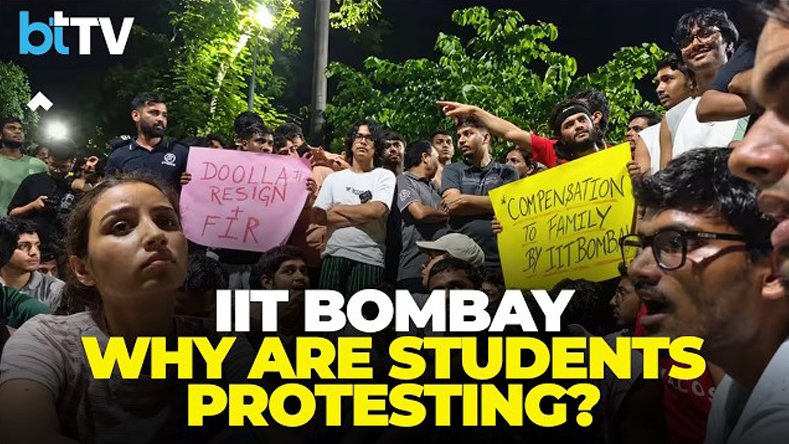
Students at the Indian Institute of Technology Bombay have been protesting since the death of second-year BTech student Sahil Wakode on September 18. What initially centred on the circumstances surrounding his death has developed into a broader campus movement, with students demanding changes to how the institute handles academic misconduct, student grievances, mental-health concerns and institutional decision-making.
The immediate incident involved an examination in which Wakode was allegedly found using a mobile phone. IIT Bombay's initial account said that he had uploaded the question paper to ChatGPT to seek answers. The institute later said that, given the ongoing investigation, it was inappropriate to characterise the circumstances before they had been established through due process.
Wakode was found dead in his hostel room later that day. His family has alleged caste-based discrimination and held people at the institute responsible for the circumstances surrounding his death. These allegations are part of an ongoing investigation and have not been established as facts. Mumbai Police's Crime Branch is investigating the case.
What Triggered the IIT Bombay Protests?
The protests intensified after students questioned how the examination incident involving Wakode had been handled and whether students facing academic or personal difficulties receive adequate institutional support.
According to IIT Bombay's initial statement, no disciplinary action had been initiated against Wakode at the time. The institute said the matter had been discussed with him by the instructor and Head of Department, who counselled him and assured him that the incident would not adversely affect his academic career.
Students, however, questioned the manner in which the episode was handled. They also raised concerns about the wider academic environment, including the way disciplinary proceedings are conducted and the availability and nature of mental-health support.
The disagreement therefore moved beyond the specific examination incident. Students began demanding institutional changes that they said were necessary to improve student welfare and accountability.
What Are IIT Bombay Students Demanding?
The students initially submitted an 18-point charter to the institute. Their demands covered several areas, including an independent investigation into Wakode's death, student representation in decision-making bodies, changes to academic malpractice procedures and reforms to mental-health and medical support.
Among the demands were:
- An independent investigation into the circumstances surrounding Wakode's death.
- Greater student representation and voting rights on committees dealing with student-related matters.
- A formal mechanism for complaints against professors and a defined escalation process.
- Changes to the handling of academic malpractice cases, including the involvement of mentors and student representatives.
- Better counselling facilities, including greater availability of counsellors.
- A 24/7 psychiatrist-on-call facility and improvements to emergency medical care.
- Mental-health sensitisation programmes for faculty and staff.
- A standing student-welfare task force involving students, faculty, mental-health professionals and external experts.
- Greater transparency around student concerns and the administration's responses.
- An assurance that students participating peacefully in the protest would not face disciplinary, hostel, financial or legal action.
The list shows why the protests cannot be understood only as a response to one examination incident. A substantial part of the students' demands concerns how the institute's broader academic and welfare systems operate.
Why Is the Investigation a Major Issue?
One of the central demands has been an investigation that students consider independent of the institute.
IIT Bombay's Board of Governors constituted a 10-member internal committee to examine the circumstances surrounding Wakode's death. Protesters subsequently questioned the committee's independence and called for it to be replaced by an external panel without current IIT Bombay employees or students.
Students have also demanded that the investigation examine not only the examination incident but the broader circumstances surrounding the death, including institutional responses and allegations raised by the family.
The case has also entered the criminal investigation process. Based on a complaint by Wakode's family, Powai Police registered a case that named Professor Suryanarayana Doolla; the investigation was subsequently transferred to the Mumbai Police Crime Branch. The allegations remain subject to investigation.
The Debate Over Academic Discipline
The protests have also brought attention to a difficult question for higher education institutions: how should allegations of academic malpractice be handled while protecting students' rights and welfare?
Students have sought a more transparent and supportive disciplinary process. Their demands include involving mentors and designated student support persons during malpractice proceedings, documenting interactions and introducing a more reformative approach to disciplinary action.
At the same time, faculty members have defended Professor Doolla, arguing that he was performing his responsibilities as an invigilator according to institute procedures. The Faculty Forum of IIT Bombay publicly expressed support for him during the protests.
This has created a wider institutional debate over how examination rules, faculty responsibilities, student welfare and due process should interact when an academic violation is alleged.
Mental Health and Student Welfare at the Centre
Mental-health support has emerged as one of the most prominent issues raised by students.
Students have questioned the availability of counselling services and called for structural changes to the Student Wellness Centre. Their demands include a specified counsellor-to-student ratio, independent audits of the wellness centre and counsellors in hostels, along with improved psychiatric and emergency medical support.
Students have also asked for compulsory mental-health sensitisation workshops for faculty and staff who regularly interact with students.
The issue is therefore not limited to the availability of counselling. Students are also seeking changes in how academic, administrative and disciplinary interactions with students are conducted.
What Has IIT Bombay Done So Far?
The institute has responded to the protests through discussions with students and changes in its administrative response.
After three days of protests, IIT Bombay Director Professor Shireesh Kedare signed the students' 18-point charter during a meeting with protesters. The administration said the demands would be taken up through the institute's decision-making process, although several details required further discussion and implementation.
The institute also removed Professor Suryanarayana Doolla from his administrative position as Dean (Administrative Affairs), while he continued as a professor. Students had demanded his suspension from faculty responsibilities as well.
More recently, an institute committee proposed changes to the handling of disciplinary cases, including allowing students to speak with mentors before disciplinary action and giving clearer information about the consequences of examination malpractice. The proposed committee includes equal representation from faculty and students.
Why This Matters Beyond IIT Bombay
The protests have raised questions that extend beyond one institution.
IIT Bombay is one of India's most prominent higher education institutions, and the events have highlighted the pressures surrounding academic performance, examination rules, disciplinary procedures and student welfare in highly competitive academic environments.
The debate also comes at a time when universities are increasingly examining how mental-health support should be integrated into campus systems rather than treated solely as an individual counselling issue.
For students, the demands raised at IIT Bombay also concern their participation in decisions that directly affect campus life. Greater representation on committees, clearer grievance mechanisms and transparency around institutional responses are among the changes protesters are seeking.
The Bigger Picture
The IIT Bombay protests have evolved from a response to the death of one student into a broader discussion about the relationship between academic discipline and student welfare.
The circumstances surrounding Sahil Wakode's death remain under investigation, and allegations made by his family and protesters should be distinguished from findings that may ultimately emerge from the criminal and institutional inquiries.
At the same time, the demands submitted by students provide a clear indication of the issues they want the institute to address: independent investigation, transparent disciplinary procedures, stronger mental-health infrastructure, greater student representation and clearer accountability.
What Comes Next
The immediate focus will be on the investigations into Wakode's death and the implementation of the reforms discussed between IIT Bombay's administration and protesting students.
Students have continued to demand an independent external investigation and have raised further concerns about the internal committee constituted by the institute. They have also called for changes to the Student Welfare Centre, disciplinary system and SC/ST Cell.
The institute, meanwhile, has begun considering changes to disciplinary procedures and student support mechanisms. How those proposals are implemented — and whether students consider them sufficient — will determine the next stage of the campus dispute.
For now, the IIT Bombay protests remain centred on a combination of grief, questions surrounding an ongoing investigation and a wider demand from students for changes to the systems that govern academic discipline, welfare and student participation on campus.





