
What's Changing
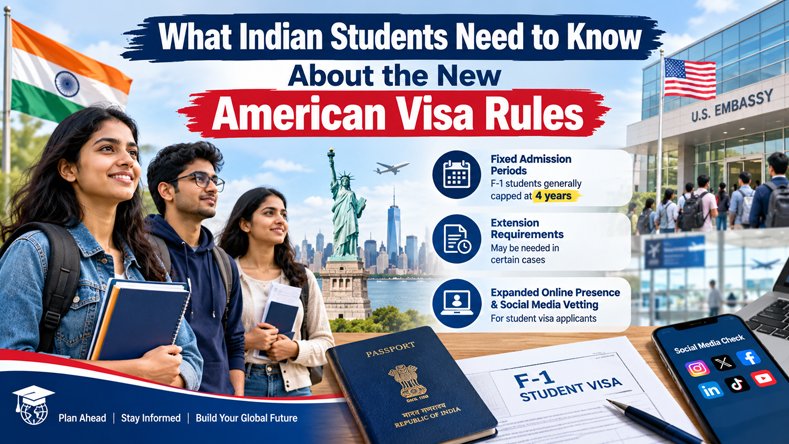
Recent changes to US visa policy appear to span several fronts. Increased scrutiny during the visa application process — including closer review of applicants' social media presence — has added an extra layer to an already detailed process. Alongside this, interview scheduling has reportedly become tighter, with fewer applicants qualifying for waivers that previously allowed some visa renewals without an in-person interview, pushing more students toward standard interview slots at US consulates.
On the employment side, changes affecting the H-1B visa — the primary pathway many international graduates use to work in the US after their studies — appear to have introduced steeper costs for employers sponsoring these visas. Since a large share of H-1B visas have historically gone to Indian professionals, any tightening here has an outsized impact on Indian students' long-term plans to work in the US after graduation.
Why This Matters for Indian Students
For Indian students, the appeal of studying in the US has traditionally rested on a fairly clear path: complete a degree, gain practical work experience through post-study work authorization, and potentially transition into longer-term employment via H-1B sponsorship. Changes that make this pathway costlier or less certain could shift how students weigh the US against other options.
Higher costs or added uncertainty at the visa stage may also affect application timelines, requiring students to plan further ahead, budget for additional fees, and be more prepared for potential delays in interview scheduling.
The Bigger Picture
These changes come amid a broader trend of India's outbound students diversifying their choices, with countries like the UK, Canada, Australia, and increasingly parts of East Asia and Europe positioning themselves as more predictable or affordable alternatives. Tighter or costlier US visa pathways could accelerate this diversification, as students and families weigh not just admission, but the full cost and certainty of the entire study-to-work journey.
What Comes Next
Students currently applying or planning to apply to US institutions will likely need to stay closely updated on official guidance from the US Department of State and USCIS, as visa policy in this space has continued to evolve. Consulting with education advisors and monitoring official channels closely, rather than relying on secondhand information, will be especially important given how quickly these rules appear to be shifting.





