
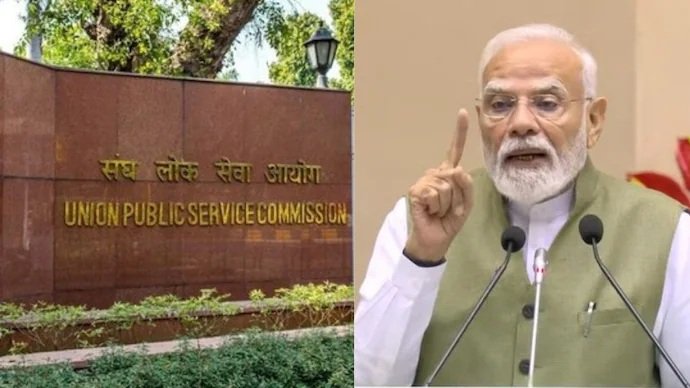
The Union Public Service Commission has completed 100 years since the establishment of India’s first Public Service Commission on October 1, 1926. What began as an advisory body under the British administration gradually evolved through constitutional reforms and the framing of the Indian Constitution into the independent constitutional authority known today as the UPSC.
The centenary offers a historical view of how India's public recruitment system moved from restricted access and colonial control towards a framework built around competitive examinations, merit and institutional independence.
From The ICS Examination To The First Public Service Commission
The roots of India's competitive public-service recruitment system go back to 1855, when the Indian Civil Service examination was introduced in London. It replaced the East India Company's earlier system of nomination with open competition. However, the examination remained difficult for Indians to access because it was conducted in London and in English, while the age limit was gradually reduced.
Satyendranath Tagore became the first Indian to enter the Indian Civil Service after clearing the examination in 1863. Over the following decades, demands for greater Indian participation in public services became an important part of the constitutional reform debate.
The Government of India Act, 1919 provided for the establishment of a Public Service Commission. The Lee Commission, which examined the organisation of the superior civil services, subsequently recommended the creation of a statutory recruitment body.
On October 1, 1926, the first Public Service Commission was finally established in India. Sir Ross Barker, a member of the British Home Civil Service, became its first chairman. The commission initially consisted of a chairman and four members and was housed at Metcalfe House in Delhi.
From An Advisory Body To A Constitutional Institution
The 1926 commission had considerably more limited powers than the institution that exists today. Its functions were governed by rules framed under the Government of India Act, 1919, and it was primarily consulted on recruitment and service-related matters.
The constitutional transformation came after Independence. During the Constituent Assembly debates, provisions were developed to establish Public Service Commissions for the Union and the states. These provisions became part of Part XIV of the Constitution, covering Articles 315 to 323.
Article 315 provides for Public Service Commissions for the Union and the states, while other provisions deal with appointments, terms of office, removal and suspension of members, functions, expenses and reporting requirements.
The constitutional framework was intended to protect the commissions from undue interference in public appointments. In his valedictory address to the Constituent Assembly on November 26, 1949, Dr Rajendra Prasad stressed the importance of maintaining the independence of Public Service Commissions to ensure impartiality in appointments.
What UPSC Does Today
A century after its establishment, the UPSC has a much wider recruitment mandate. It conducts examinations and recruitment processes for several central government services, including the Civil Services, Indian Forest Service, Engineering Services, Combined Medical Services, National Defence Academy and Naval Academy, Combined Defence Services and Central Armed Police Forces, among others.
The Civil Services Examination remains its most prominent examination, serving as the recruitment route for services such as the Indian Administrative Service, Indian Foreign Service and Indian Police Service.
Its role, however, extends beyond conducting written examinations. The constitutional provisions also give Public Service Commissions responsibilities related to recruitment methods, appointments, promotions and disciplinary matters, depending on the applicable rules and government requirements.
Why The 100-Year Journey Matters
The history of the UPSC reflects a broader change in the philosophy of public recruitment in India. The early system was shaped by colonial administrative requirements and offered limited opportunities for Indians. Over time, competitive examinations and constitutional safeguards became central to the process of selecting personnel for public administration.
The institutional independence of the commission is particularly significant because public-service recruitment involves decisions that can influence the composition and functioning of the government workforce.
At the same time, the examination system has continued to evolve with changes in technology, administration and candidate expectations. The UPSC website currently lists digital recruitment initiatives, examination notifications and changes to examination procedures, reflecting the continuing modernisation of its processes.
The Bigger Picture
The UPSC's centenary is therefore not simply a milestone in the history of one examination body. It marks 100 years of institutional evolution in how India recruits personnel for its public services.
From the first commission established in 1926 to a constitutional body operating under Articles 315 to 323, its journey mirrors India's transition from colonial administration to a constitutional democracy. The principle of competitive recruitment that developed gradually over the past century continues to remain central to the country's system of public appointments.
As the UPSC enters its second century, the challenge will be to preserve the constitutional principles of impartiality and merit while adapting recruitment processes to changing administrative requirements and new technologies.





