
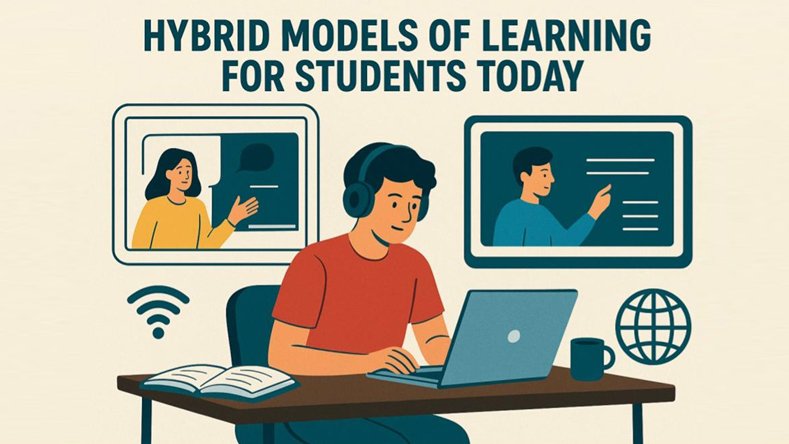
For working professionals, returning to education is rarely as simple as choosing between an online course and a traditional classroom. A full-time job can make fixed class schedules difficult, while completely online programmes can sometimes demand a high level of self-discipline and provide fewer opportunities for direct interaction.
This is where hybrid learning is gaining attention. By combining online coursework with scheduled face-to-face sessions, hybrid programmes attempt to reduce the limitations associated with either format on its own. The OECD notes that adult education increasingly needs flexible and tailored learning pathways that allow learners to work at their own pace while connecting education to their professional and personal goals.
For professionals, therefore, the question may no longer be whether online or classroom learning is universally better, but which combination of learning modes fits their circumstances.
What Hybrid Learning Involves
Hybrid learning generally combines online and face-to-face instruction, with some classroom teaching replaced by digital learning. This differs from blended learning, where teaching remains primarily classroom-based but is supplemented with online resources and activities.
In a professional programme, this could mean attending certain lectures or workshops on campus while completing readings, assignments, discussions or recorded lessons online. Some more flexible models, such as HyFlex, allow students to choose between attending a session in person or participating remotely, sometimes even changing their mode of participation from one session to another.
The exact structure varies by institution. Some programmes may have fixed in-person weekends, while others may schedule occasional workshops, examinations, laboratory sessions or networking events.
Why Flexibility Matters for Working Professionals
The biggest challenge for many working professionals is not necessarily the difficulty of the academic material but finding enough time to engage with it.
A conventional full-time programme can require professionals to reorganise working hours, commuting arrangements and family responsibilities around a fixed academic timetable. Online learning removes much of that geographic and scheduling pressure, allowing students to study from home or another location.
The OECD highlights this flexibility as particularly relevant to adult learners, who often have established professional and personal responsibilities and may prefer learning opportunities that give them greater control over when and how they study.
Hybrid learning extends that flexibility without completely removing the structure of physical classes. A professional may be able to complete theory-based work online during the week and attend an in-person session when direct interaction, practical work or discussion is more valuable.
The Case for In-Person Learning
Online education offers flexibility, but physical classrooms continue to provide benefits that are difficult to reproduce completely through a screen.
Face-to-face sessions can create opportunities for spontaneous discussion, peer interaction, networking and direct engagement with instructors. Research into synchronous hybrid higher education has found that students often value on-site participation because of social interaction and the structure it provides.
For working professionals, these interactions can have an additional dimension. A classroom can bring together people from different industries, companies and professional backgrounds, potentially creating opportunities to exchange experiences and build professional networks.
This can be particularly relevant for management, leadership, entrepreneurship and other programmes where discussion and peer learning form an important part of the educational experience.
Where Online Learning Has an Advantage
The strongest argument for online learning is flexibility.
Professionals who travel frequently, work irregular hours or live far from an institution may find regular campus attendance difficult. Online classes can reduce commuting time and allow learners to access course material from different locations.
Research on hybrid participation also shows that students use online participation to accommodate their individual circumstances and learning preferences. At the same time, researchers caution that online participation requires considerable self-organisation and learner autonomy.
This distinction matters. Flexibility does not automatically mean less effort. A professional may gain more control over their schedule, but they still need to plan study time around work and personal commitments.
The Importance of Programme Design
Hybrid learning is not simply a matter of putting classroom lectures online.
The quality of the experience depends heavily on how the programme is designed. A 2025 systematic review of 57 empirical studies on HyFlex courses found that successful implementation involves considerations around learning outcomes, technology, instructional strategies and support for both students and instructors.
For working professionals, this means prospective students need to look beyond the label “hybrid”. They should examine how many sessions actually require physical attendance, whether online classes are live or recorded, how assessments are conducted, how much group work is involved and what academic support is available.
A programme with only occasional campus requirements may suit someone who travels regularly, while another with weekly classroom sessions may work better for someone who values consistent face-to-face interaction.
Why This Matters for Career-Focused Education
Professional education is increasingly connected to continuous upskilling rather than a single period of study followed by a permanent transition into employment.
As industries change, employees may return to education for new qualifications, specialised skills, management training or career transitions. Recent higher-education initiatives for adult learners reflect this broader shift towards programmes that accommodate professionals while they remain in employment.
Hybrid models can fit into this environment because they do not necessarily require professionals to choose between continuing their careers and returning to education.
The model also reflects a wider change in how institutions think about adult learners. Instead of expecting every student to follow the same timetable and learning pathway, flexible formats can recognise that professional students may have substantially different schedules and responsibilities.
The Bigger Picture
The debate between online and in-person education is increasingly becoming less binary.
For some learners, a fully online programme may provide the accessibility and flexibility they need. Others may benefit from the structure and social interaction of a physical classroom. Hybrid learning attempts to accommodate both needs, but its value ultimately depends on the quality and design of the programme.
Recent research describes synchronous hybrid learning as a way of responding to increasingly diverse student populations, particularly where learners need to reconcile education with work, family and other responsibilities.
For working professionals, that flexibility can be especially significant. The ability to participate online when work demands it while retaining opportunities for face-to-face learning can make further education easier to integrate into an already established routine.
What Comes Next
As professional and continuing education expands, institutions are likely to keep experimenting with different combinations of online, classroom and flexible participation.
The focus, however, is likely to move beyond simply offering a course in multiple formats. Effective hybrid education requires reliable technology, thoughtful course design, meaningful interaction and clear expectations for students and instructors.
For professionals considering further study, the key question is therefore not simply whether a programme is online, offline or hybrid. It is whether the programme's structure matches their work schedule, learning preferences, career objectives and capacity to attend in person.
In that sense, hybrid learning may not replace either online or classroom education. Instead, it can provide a practical middle ground for learners who need the flexibility of one and the interaction of the other.





