
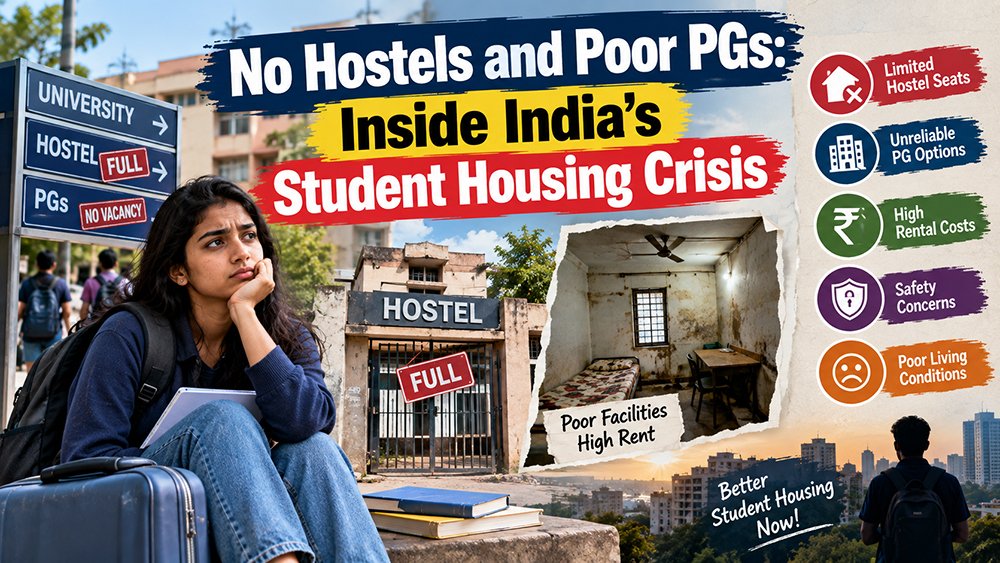
Currently, the waiting period for millions of secondary students transitioning to university life represents a steep uphill climb to mentally adapt from protected family homes to unsafe, unauthorized rentals, turning standard online accommodation portals into hubs of frantic anticipation.
What the Accommodation Shortfall Involves
According to policy insights from municipal boards, the path to seamless university management centres on bridging the logistical divide between elite institutional campuses and substandard regional rentals. Scrutiny of previous relocation timelines indicates that while wealthy urban families adapt to premium private housing markets seamlessly, rural or remote students—who cater to the vast majority of the country's diverse demographic—face distinct bottlenecks in securing affordable rooms, finding safe locations, and managing high security deposits when college allocations arrive unexpectedly.
In the case of infrastructure building, student unions flag that highly rigid university admission schedules force outstation candidates to prioritize finding immediate, desperate shelter over basic structural safety and hygienic understanding. After evaluating the variable living conditions across different academic hubs, regulators concluded that a single, unyielding academic admission cycle will trigger immense psychological and financial stress unless student-specific accommodation contexts are anticipated well in advance.
A similar issue arises with physical safety and regional access, where structural flaws or unsafe illegal constructions in specific student enclaves create sudden, dangerous bottlenecks. Following a catastrophic incident on September 8, 2026, where a paying guest (PG) building collapsed near Delhi University's South Campus in Satya Niketan, educational planners have sought an earlier overhaul of rental laws—emphasizing that digital registry updates, safety audits, and affordable housing windows must be collectively scaled to give all migrating youth an equal foot in preparation.
The administrative friction is arguably the most serious of the challenges, relating directly to the overlapping pressure from centralized, national entrance examinations like JEE, NEET, and CUET. Because higher secondary validation sits as the definitive gateway to university validation, the rapid routing of students into hyper-congested cities far from home frequently stalls effective study management, slowing down the classroom absorption of core subjects as students scramble for basic survival needs.
Why This Matters
Student housing infrastructure sits in a uniquely sensitive demographic category—unlike early primary education, a robust and safe university ecosystem directly determines India's domestic human capital pipeline and its long-term economic competitiveness. This is precisely why flexible, proactive federal planning must dictate execution: localized barriers, such as unregulated rent spikes, sudden regional displacements, or unsafe structural hazards in student hubs, cannot be fixed effectively from New Delhi without giving state municipalities a comprehensive head start.
Preserving student well-being plays a critical role in maximizing academic output, and targeted state-level adjustments exist precisely to ensure that vulnerable, low-income, or highly anxious student demographics are not left behind by aggressive academic dates or predatory rental practices. A structural bottleneck in preparing safe, institutional living quarters is treated with particular seriousness, as it threatens to alienate a massive pipeline of eligible youth whose core talents could be lost under the weight of systemic accommodation anxiety.
The Bigger Picture
This sudden infrastructure push puts a spotlight on the multi-layered nature of educational and municipal governance in India—covering not just academic curriculum administration, but complex digital tracking of local housing safety. The fact that top administrators are prioritizing rental oversight suggests that the central education ministry is trying to act as a supportive catalyst for incoming students rather than leaving them to navigate dangerous, unmonitored local logistics in isolation.
The inclusion of online portals and mandatory digital compliance to access safe housing listings on official portals, meanwhile, reinforces why academic bodies advocate for balanced digital adoption. Policy experts maintain that while digital registration can serve as a powerful administrative enabler to fight predatory brokers and fraudulent listings, technology must not become an unregulated substitute for physical safety inspections or core student welfare values.
What Comes Next
Further developments are awaited on how the Ministry of Housing and Urban Affairs structures new financing buffers for public universities managing massive outstation student intakes simultaneously. Closer attention will also be paid to whether state governments actively align their local municipal bodies with national safety regulations to prevent further building disasters. The case will undoubtedly prompt a systemic review of state-by-state student migration survival rates from secondary school desks to professional education arenas across the country.





