
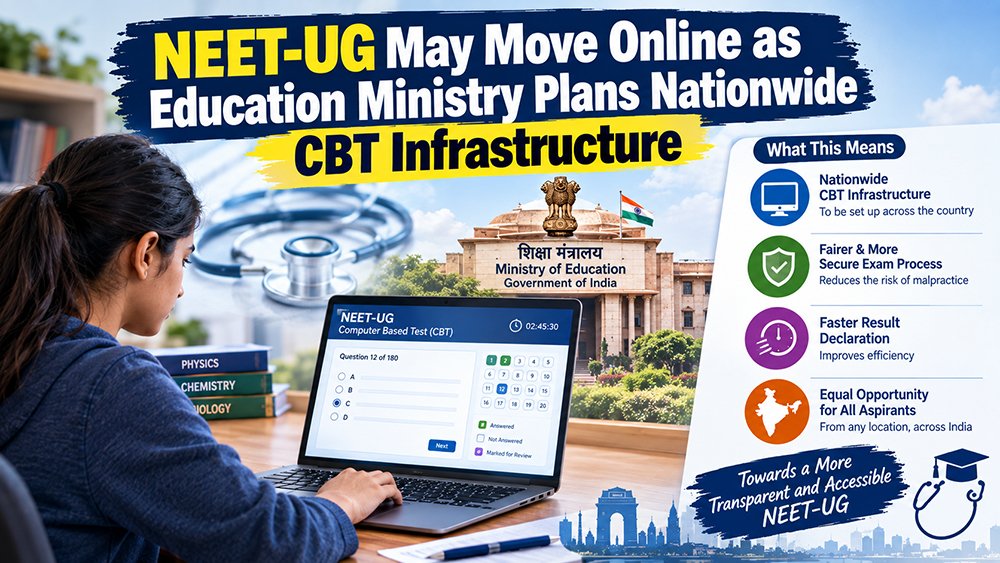
The Ministry of Education is working on a plan to create a wider and more standardised network of computer-based testing infrastructure across the country, with NEET-UG expected to be among the major examinations that could eventually migrate to the digital format.
The proposed strategy is aimed at addressing one of the biggest challenges in conducting a computer-based examination at the scale of NEET: ensuring that adequate and standardised computer infrastructure is available across regions. The National Testing Agency (NTA), which conducts NEET-UG, already administers several major entrance examinations in CBT mode.
Why The Government Is Planning A Nationwide CBT Network
NEET-UG is one of India's largest entrance examinations, attracting millions of candidates each year for undergraduate medical admissions. Conducting such an examination online would require significantly more computer capacity than is currently available through the NTA's existing testing network.
The Ministry is therefore considering a multi-model sourcing architecture for the proposed infrastructure. Instead of relying on a single model for creating examination capacity, the approach could involve different sources and arrangements for making computer facilities available to candidates.
The broader objective is to establish a reliable network that can support not only NEET but potentially other large-scale entrance examinations as they transition towards CBT.
Standardising Examination Infrastructure
Moving a national examination online involves more than providing computers. Examination centres need reliable power supply, connectivity, adequate seating, secure systems and technical support.
A nationwide infrastructure strategy could allow the authorities to establish common standards for centres and technology providers. This would be particularly important for an examination such as NEET, where candidates appear from cities as well as smaller towns and rural areas.
The availability of centres across regions is another consideration. A sufficiently wide network would reduce the need for students to travel long distances to take the examination and could make the transition more practical.
NTA Already Conducts Major CBT Examinations
The NTA already has experience conducting large examinations through computer-based testing. Its examinations include the Joint Entrance Examination (JEE) Main, the Common University Entrance Test (CUET-UG) and several other national-level tests.
This existing experience provides a foundation for expanding CBT infrastructure. However, NEET presents a different scale and operational challenge because of the size and geographical spread of its candidate base.
The transition would therefore require careful planning around capacity, scheduling, cybersecurity, technical reliability and contingency arrangements.
What Could Change For NEET Candidates?
For students, the most visible change would be the shift from marking answers on an optical mark recognition (OMR) sheet to answering questions on a computer.
Such a move could alter the examination experience, particularly for students who have limited access to computers or are more accustomed to traditional pen-and-paper examinations.
At the same time, CBT systems can offer standardised testing environments and reduce some of the logistical requirements associated with printing, transporting and handling physical question papers and answer sheets.
The transition would therefore require sufficient preparation and familiarisation for candidates, especially those from regions where regular access to computer-based learning and testing may be more limited.
The Bigger Picture
The proposed infrastructure strategy is part of a broader shift towards digital assessment in India's education system. Large-scale examinations increasingly require systems capable of handling millions of candidates while maintaining security and consistency.
For NEET-UG, however, the scale makes the transition particularly significant. The challenge will be to create enough testing capacity without compromising accessibility or introducing new disparities between candidates.
The multi-model approach under consideration could help expand capacity by drawing on different sources of infrastructure rather than depending entirely on a single network of examination centres.
What Comes Next
The Ministry's infrastructure planning will need to be followed by decisions on implementation, centre capacity, technology standards and the timeline for NEET-UG's transition to CBT.
For students preparing for medical entrance examinations, the immediate format remains important, but the proposed nationwide infrastructure plan signals that the examination system could undergo a major technological change.
If implemented, the shift would make NEET-UG one of India's largest examinations to move from a traditional paper-based format to a nationwide computer-based system, making the availability and reliability of testing infrastructure a central part of the reform.





