
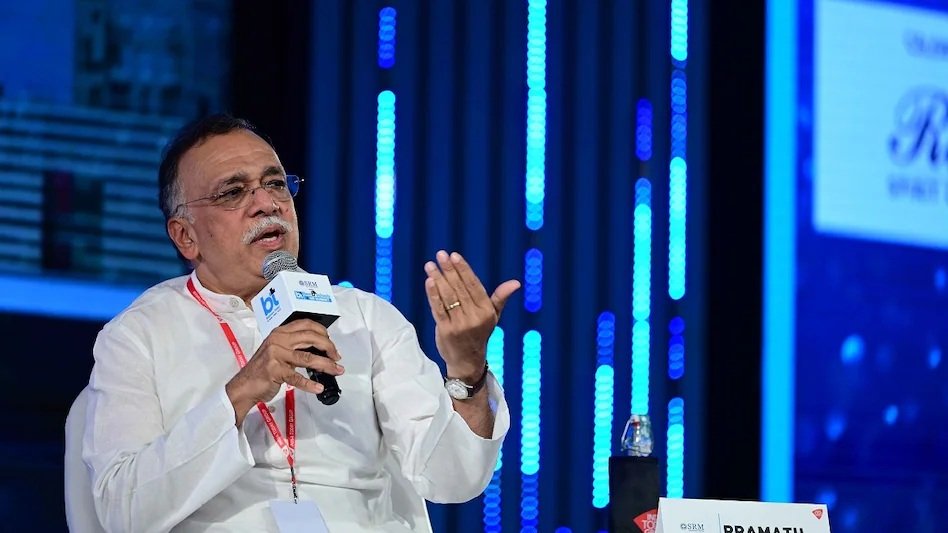
In a recent assessment of the sector, Sinha—the visionary co-founder of Ashoka University and the founding dean of the Indian School of Business (ISB)—argues that India has conquered the challenge of scale. Now, the nation faces a much tougher mountain to climb: building truly distinctive, world-class universities that can compete on the global stage.
The Era of Scale: What India Got Right
Since the turn of the millennium, India’s primary mission was to democratize access to degrees. The country achieved this through two parallel engines:
- The Private University Boom: Institutions like Chandigarh University, Manipal, SRM, and Amity scaled rapidly, introducing massive multi-disciplinary campuses across the country.
- The Public Sector Expansion: The Indian government aggressively scaled its premier brands, expanding the network to 23 IITs, 22 IIMs, and 20 AIIMS hubs.
While this massive expansion successfully brought millions of students into the formal education net, Sinha notes that the strategy has hit a ceiling. It has created a homogeneous landscape where institutions look almost identical in their offerings, structures, and teaching methodologies.
The Innovation Blindspot: Why India Lags Globally
Despite boasting one of the largest higher education systems in the world, India’s presence in elite global brackets remains minimal. A vast majority of Indian institutions still sit entirely outside the top 500 of the QS World University Rankings.
Sinha points out that local ranking frameworks like the National Institutional Ranking Framework (NIRF) have inadvertently incentivized a "copy-paste" culture. Universities have mastered the art of competing against each other using standardized metrics, but they are not innovating globally. Instead of developing unique institutional identities, specialized niches, or deep-tech research ecosystems, most schools have settled for becoming standard degree-printing factories.
The 4 Pillars of a Distinctive University
To break free from this mediocrity, Sinha outlines a critical four-part framework that educational leaders and policymakers must adopt immediately:- Talent Circularity: Indian campuses must evolve into intellectual hubs that do not just stop the "brain drain" but actively attract global faculty and researchers to stay and build their careers in India.
- Research-Driven Value: Academic research cannot exist in a vacuum. True distinctiveness comes when groundbreaking campus research directly feeds into classroom curriculums and translates into commercialized, real-world industry solutions.
- Tech-Infused Infrastructure: Technology should not be treated as a cosmetic add-on or a basic digital dashboard. Universities must use artificial intelligence and advanced tech frameworks to accelerate institutional innovation and pedagogy.
- Quality-First Policy: Regulatory bodies must pivot from checking bureaucratic boxes to aggressively rewarding authentic quality, protected autonomy, and unique institutional missions.
The Verdict: A Change in Mindset
Sinha’s core message is a direct call to action for vice-chancellors, founders, and policy architects. The metrics of success for the next 25 years cannot be measured in seat capacity or campus acreage. India’s global economic ambitions depend on whether its leaders stop asking how to make universities bigger, and start figuring out how to make them different.





