
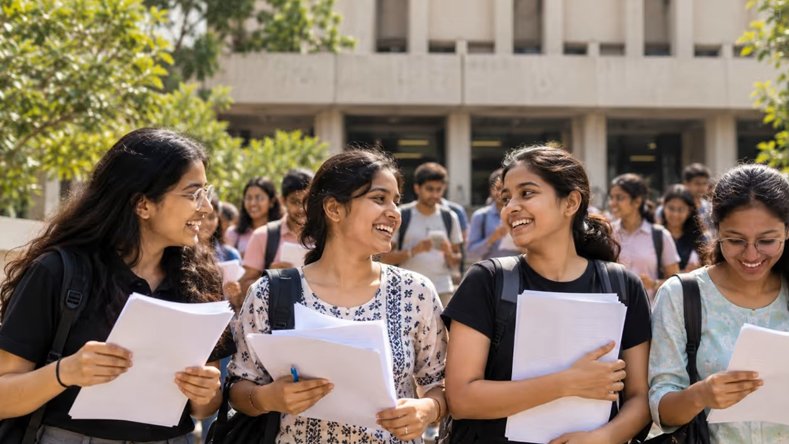
Women candidates recorded a qualification rate of 23.4% among registered candidates in JEE Advanced 2026, marking the highest level seen in the past six years. The figure is also an increase from 21.7% in 2025, indicating a gradual rise in the proportion of women progressing through one of India’s most competitive engineering entrance examinations.
According to the Joint Implementation Committee (JIC) report released by IIT Roorkee, 43,112 women candidates registered for JEE Advanced 2026. Of these, 40,562 appeared in both papers, while 10,107 women candidates qualified. The number marks a significant milestone as female qualifiers crossed the 10,000 mark for the first time.
Women’s Qualification Rate Shows Steady Improvement
The rise in the qualification rate comes amid continued efforts to improve women’s representation in the IIT system. JEE Advanced serves as the gateway to undergraduate programmes at the Indian Institutes of Technology (IITs), making the participation and qualification trends of women an important indicator of gender representation in India’s premier engineering institutions.
The 2026 figures suggest that a larger proportion of registered women candidates are now clearing the examination compared with previous years. However, qualification remains only one stage of the admission process, with seat allocation and programme preferences determining how many successful candidates ultimately enter IITs.
In 2026, 3,814 female-only seats, including female supernumerary seats, were allotted. In addition, 37 female candidates secured seats through the gender-neutral pool.
The introduction of female supernumerary seats at IITs has been part of broader efforts to increase the representation of women in engineering education. These seats are designed to expand the number of women admitted without reducing the number of seats available through the gender-neutral pool.
SC and ST Qualification Rates Also Rise
The JIC report also highlighted a substantial improvement in the qualification rates of candidates belonging to Scheduled Caste (SC) and Scheduled Tribe (ST) categories.
The qualification rate for SC candidates increased by 9.8 percentage points, while the rate for ST candidates rose by 8.1 percentage points in 2026.
In absolute numbers, the increase was also significant. The number of SC candidates qualifying for JEE Advanced rose from 12,499 in 2025 to 15,856 in 2026. Similarly, the number of ST qualifiers increased from 5,008 to 6,379 over the same period.
These figures point to a broader improvement in the representation of candidates from categories that have historically faced barriers in accessing elite engineering education. The data also underline the continuing role of reservation policies and targeted measures in shaping participation across the IIT admission system.
What the 2026 Figures Indicate
The latest JEE Advanced results provide two notable signals: women are qualifying at their highest rate in six years, and candidates from SC and ST categories have recorded substantial gains in qualification.
However, qualification statistics alone do not capture the complete picture of diversity at the IITs. Admission, branch allocation, retention and eventual participation in different engineering disciplines are also important measures of representation.
The 2026 data nevertheless mark a significant milestone for women in particular, with the number of female qualifiers crossing 10,000 for the first time. Continued monitoring of these trends will be important in assessing whether the improvement translates into sustained growth in women’s participation across IIT programmes.





