
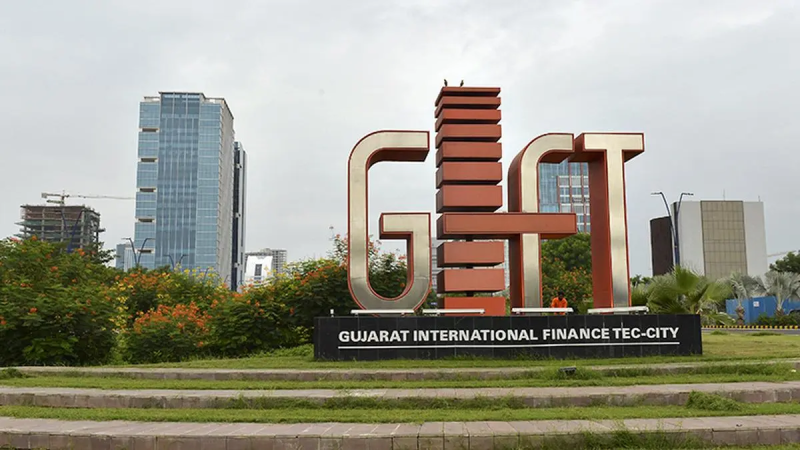
India and France are looking to deepen their higher education partnership, with French institutions being invited to explore establishing branch campuses in India, including at Gujarat’s GIFT City. The proposal was discussed during a bilateral meeting between Union Education Minister Pralhad Joshi and France’s Minister for Higher Education, Research and Space, Philippe Baptiste in New Delhi on September 28.
The discussions come at a time when India is seeking to expand the internationalisation of its higher education sector and attract more foreign institutions into the country. Alongside branch campuses, the two countries are also revisiting their Mutual Recognition of Qualifications (MRQ) Agreement, an arrangement that could have implications for students seeking to study or pursue further academic opportunities across the two education systems.
What the India-France Higher Education Push Involves
Under the latest discussions, India has invited French higher education institutions to consider establishing campuses at GIFT City as well as in locations where French companies operate and require technically trained manpower.
The proposal potentially links higher education expansion with emerging economic and industrial hubs. GIFT City, an international financial and technology centre in Gujarat, has increasingly become part of India's plans for attracting international institutions and developing specialised talent.
The India-France discussions also covered stronger institutional linkages, student, faculty and researcher mobility, collaborative academic programmes and exchanges. Both sides explored opportunities to expand cooperation in life sciences, social sciences and humanities, alongside joint academic and research initiatives.
Why the Qualifications-Recognition Pact Matters
A major part of the discussions was the ongoing revision of the India-France Mutual Recognition of Qualifications Agreement.
The existing agreement was signed in 2018 and came into force in 2019. It establishes comparability between several Indian and French qualifications, including the Indian bachelor's degree and the French licence, Indian master's degrees and corresponding French master's-level qualifications, as well as PhDs and doctorates. The agreement also covers school-level qualifications such as the Indian Senior School Certificate Examination and the French baccalauréat.
Professional qualifications such as medicine and law are excluded from the existing arrangement because they involve separate requirements linked to professional practice.
Revisiting the agreement could therefore become important as student mobility between India and France expands. Greater clarity around qualification recognition can make it easier for students and institutions to understand how degrees earned in one country are treated within the other country's higher education system.
Beyond Branch Campuses: Student and Faculty Mobility
The proposed campuses are only one part of the broader India-France education agenda.
The two governments also discussed increasing student, faculty and researcher mobility. Collaborative academic programmes and exchanges were identified as areas where existing institutional relationships could be expanded.
For students, such partnerships can create opportunities to engage with foreign academic institutions without necessarily following a conventional model of completing an entire degree abroad. Joint programmes, exchanges and institutional collaborations can connect students and researchers across the two systems while retaining links with their home institutions.
The discussions also placed emphasis on language learning and teacher education, reflecting the people-to-people dimension of the India-France relationship.
Research and Innovation Take Centre Stage
Research collaboration formed another important part of the discussions.
India and France explored greater cooperation in life sciences, social sciences and humanities, with the two sides looking at new avenues for joint academic and research initiatives. The countries also discussed sharing expertise in digital education and using technology to widen access to quality learning.
The focus comes during the India-France Year of Innovation 2026, giving the education partnership a wider connection with the two countries' efforts around research, technology and innovation.
The emphasis on research is significant because the proposed expansion is not limited to bringing foreign university brands into India. The discussions also cover institutional partnerships, researcher mobility and joint academic work, potentially creating longer-term links between Indian and French research ecosystems.
GIFT City and India's Foreign University Push
The proposal for French institutions comes as India continues to create pathways for foreign universities to establish a presence domestically.
Under the University Grants Commission's 2023 regulations, foreign higher education institutions can establish and operate campuses in India subject to the applicable regulatory framework. Business Standard reported that the government had issued 16 letters of intent to foreign higher education institutions from countries including Australia, Italy, the UK and the US as of August 2026.
GIFT City has also emerged as a location for international higher education institutions under the regulatory framework associated with the International Financial Services Centre.
This creates a potential setting where foreign universities can establish programmes closer to India's financial, technology and business ecosystem while contributing to specialised talent development.
Why This Matters for Indian Students
For Indian students, the expansion of foreign university partnerships could change how international education is accessed.
A foreign university campus in India can potentially provide access to an international curriculum and academic environment without requiring students to relocate overseas for the entire duration of a programme. Exchange arrangements and joint degrees can provide another route for students who want international academic exposure.
However, the practical value of these opportunities will depend on factors such as programme availability, tuition costs, admission requirements, accreditation, qualification recognition and the extent of mobility offered by individual institutions.
The revision of the India-France qualifications agreement could become particularly relevant in this context because students and graduates need clarity about how their academic credentials are treated when moving between the two systems.
The Bigger Picture
The India-France discussions reflect a broader shift in India's approach to international higher education.
Foreign university participation is increasingly being considered alongside domestic talent development, research collaboration, innovation and industry requirements. The invitation to French institutions to consider GIFT City and locations where French companies operate illustrates how academic expansion can be connected to economic and workforce needs.
For France, a stronger institutional presence in India could also provide opportunities for deeper academic and research engagement with one of the world's largest higher education systems.
The partnership is therefore moving beyond student exchanges alone. Branch campuses, qualification recognition, researcher mobility, language education, digital learning and collaborative research are emerging as interconnected parts of the relationship.
What Comes Next
The immediate focus will be on how French higher education institutions respond to the invitation and how the two governments take forward the revision of the Mutual Recognition of Qualifications Agreement.
The September 28 meeting concluded with both sides reaffirming their commitment to cooperation in higher education, innovation, language education and digital learning.
If the discussions progress into concrete institutional agreements, Indian students could see more opportunities to access French higher education programmes within India, while universities and researchers on both sides could gain new avenues for collaboration.
For now, however, the developments represent an expansion of the framework for India-France education cooperation rather than a completed rollout of new French university campuses. The next stage will depend on institutional decisions, regulatory processes and the outcome of the qualifications-recognition discussions.





