
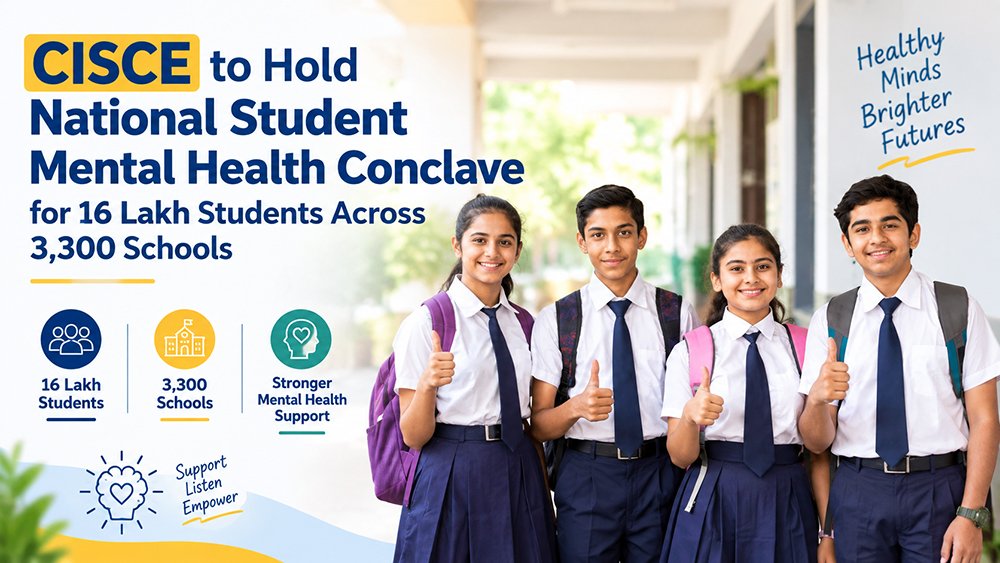
The Council for the Indian School Certificate Examinations (CISCE) is set to launch a nationwide Student Mental Health and Well-Being Conclave 2026, creating a structured platform for students to discuss the pressures and challenges affecting their emotional well-being.
The initiative will coincide with World Mental Health Day on October 10 and will unfold across three levels — school, regional and national. Rather than limiting discussions to a single awareness event, CISCE plans to collect student perspectives from schools and carry them through regional discussions before bringing selected representatives together at a national conclave.
The programme is expected to involve nearly 16 lakh students from Classes VI to XII, around 32,000 teachers and more than 3,300 affiliated schools, making it one of the largest school-based mental-health dialogue initiatives announced by a school board in India.
What the CISCE Mental Health Conclave Involves
The initiative will be conducted in three stages, beginning with discussions at the school level.
The first stage, the School-Level Mental Health and Well-Being Dialogues, will run from October 4 to October 31 across CISCE-affiliated schools. Students will participate in classroom discussions around four broad themes:
- Student stress and academic pressures
- Emotional well-being, digital life and positive relationships
- Drugs, substance abuse and healthy choices
- Building resilience and help-seeking behaviour
The objective is to create a repository of student perspectives and experiences while encouraging schools to strengthen listening, empathy and peer-support mechanisms.
The initiative will then move from individual schools to regional discussions before culminating in a national forum.
From School Discussions to Regional Conclaves
The second tier will consist of Regional Student Mental Health and Well-Being Conclaves, which will be conducted virtually across 18 regions from November 4 to November 14.
Selected student representatives and teacher mentors will examine the concerns and perspectives emerging from school-level discussions. The process will also identify participants who will move forward to the national stage through a merit-based selection process.
This structure gives the initiative a different purpose from a conventional school counselling or awareness programme. Instead of only providing information to students, the process is designed to allow student experiences to feed into discussions at higher levels.
The regional stage will therefore act as a bridge between classroom conversations and the recommendations eventually developed at the national conclave.
What Will Happen at the National Conclave?
The final stage, the CISCE National Student Mental Health Conclave 2026, is scheduled to take place from November 20 to 22 at the CISCE Centre of Excellence in Hyderabad.
The national gathering will bring together 72 students representing the 18 regions, 18 teacher mentors, mental-health and policy experts, CISCE leadership, partner organisations and media representatives.
One of the key proposed outcomes is a CISCE Student Mental Health Charter. The charter is expected to outline principles, rights, responsibilities and recommendations aimed at creating emotionally safe and supportive school environments.
CISCE also plans to work towards a Student Well-being Index, a repository of exemplary school practices and a White Paper on Emerging Mental Health Concerns among Adolescents.
Why Academic Stress Is Part of the Conversation
Academic pressure is one of the four themes specifically identified for the school-level discussions.
For students in Classes VI to XII, academic expectations can coincide with major transitions in schooling, examinations and decisions around higher education. By placing academic stress alongside emotional well-being, digital life and help-seeking behaviour, the CISCE initiative treats student well-being as a broader school-environment issue rather than one limited to examination performance.
The focus on resilience and help-seeking is also significant. The programme is intended to encourage students to recognise when they need support and to strengthen the pathways through which they can seek appropriate assistance.
Digital Life and Positive Relationships Get Separate Focus
CISCE has also included digital life and positive relationships as a dedicated discussion area.
For school students, digital platforms are increasingly intertwined with communication, social relationships, entertainment and learning. The inclusion of this theme allows schools to discuss emotional well-being in the context of students' wider social and digital environments.
The objective, according to the initiative's stated framework, is not simply to discuss technology use but to encourage conversations around emotional well-being, relationships and supportive environments.
Substance Abuse and Healthy Choices
Another school-level theme will address drugs, substance abuse and healthy choices.
The inclusion of substance use within a wider mental-health dialogue places prevention alongside discussions about resilience, emotional well-being and seeking help. Schools will be able to use the classroom conversations to understand student concerns and identify areas where additional support or awareness may be needed.
This also forms part of the initiative's broader objective of creating school environments where students can discuss difficult issues without limiting mental-health conversations to formal counselling sessions.
Why This Matters for Schools
The scale of the initiative means that its significance extends beyond the individual students selected to attend the national conclave.
The school-level discussions are expected to generate a large body of student experiences and perspectives. Those insights will then be carried into regional discussions and eventually into the national forum.
This approach could give schools a more direct understanding of the issues students themselves identify as affecting their well-being.
It also places teachers in the process. With approximately 32,000 teachers involved across the network, the initiative is designed to involve adults who are regularly present in students' academic environments rather than treating mental health as a concern handled separately from everyday schooling.
From Awareness to a Mental Health Framework
A key feature of the conclave is its proposed policy and practice outcomes.
The Student Mental Health Charter, Student Well-being Index and White Paper are intended to turn the discussions into longer-term resources and recommendations for schools.
CISCE Chief Executive and Secretary Dr Joseph Emmanuel has said the objective is to listen systematically to students and translate their experiences into practical recommendations, stronger school practices and a shared framework for student well-being.
The council has also indicated that the conclave could eventually become a biennial initiative, potentially giving student mental health a recurring platform within the CISCE school network.
The Bigger Picture
The CISCE initiative comes amid wider attention to student mental health in school education, particularly around academic pressure, emotional well-being and the ability of institutions to identify and respond to student concerns.
What distinguishes this initiative is its scale and its attempt to build a process through which student perspectives move from classrooms to regional and national discussions.
The emphasis on listening is also important. Mental-health programmes in schools often focus on awareness campaigns, counselling and preventive education. CISCE's proposed model adds another layer by asking students to identify and articulate the issues they experience and by using those perspectives to inform institutional recommendations.
What Comes Next
The first stage of the initiative will begin on October 4, with school-level dialogues continuing until October 31. Regional virtual conclaves will follow from November 4 to 14, before the national conclave takes place in Hyderabad from November 20 to 22.
The eventual impact will depend on how the findings from these discussions are translated into school-level practices and whether the proposed charter, index and recommendations are adopted across the CISCE network.
For now, the initiative marks a move towards making student voices a central part of conversations about school mental health — taking the discussion from individual classrooms to a national platform involving students, teachers, experts and education leaders.





