
India’s academic success is increasingly being measured beyond board examination results and competitive entrance rankings. Students representing the country at international Olympiads are winning medals across scientific disciplines, while some of India’s leading institutions are creating specialised admission routes that recognise exceptional performance in mathematics, science, computing and other fields.
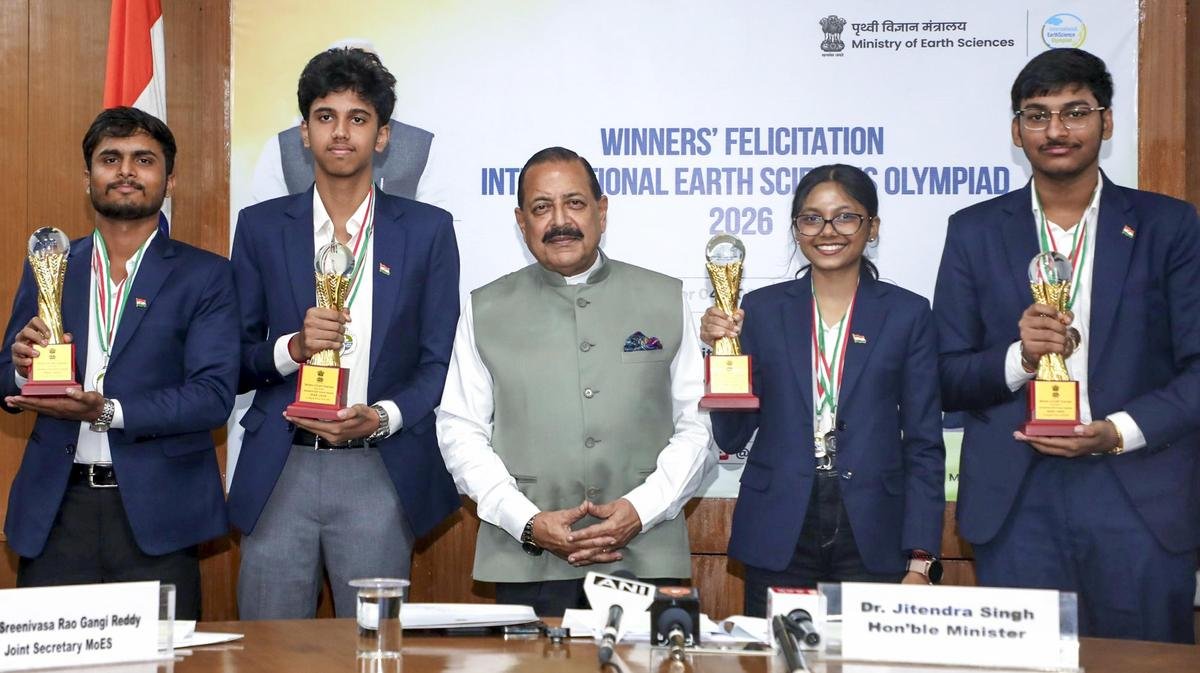
The growing attention follows another strong performance by Indian students at the International Earth Science Olympiad (IESO) 2026 in Italy, where Team India won nine medals, including four gold medals. The achievement has renewed interest in the country’s Olympiad ecosystem and the opportunities it can create for students with advanced subject knowledge and problem-solving abilities.
What Makes Olympiads Different from Board Exams?
Board examinations primarily assess students against prescribed syllabuses, while competitive entrance examinations such as JEE focus on selection through timed tests. Olympiads, meanwhile, are designed to identify students with exceptional subject-specific abilities, often requiring deeper conceptual understanding, analytical thinking and original problem-solving.
India’s Olympiad selection process typically involves multiple stages, progressing from preliminary examinations to national-level competitions, training camps and, for selected students, international representation. The process is highly competitive, with only a small proportion of participants reaching the final national teams.
For students who enjoy exploring subjects beyond classroom requirements, Olympiads can provide an opportunity to develop advanced academic skills and gain recognition at national and international levels.
Can Olympiad Performers Get into IITs Without JEE?
One of the most significant developments is the emergence of Olympiad-based admission routes at select IITs and other premier institutions.
IIT Gandhinagar, for example, has offered BTech admission opportunities to students selected for specified Olympiad training camps or those who have earned medals at recognised international Olympiads, subject to its eligibility requirements.
IIT Kanpur has also announced an Olympiad admission channel for its 2026–27 undergraduate admissions. The JEE Advanced website confirms that some IITs admit students based on their performance in international Olympiads without requiring them to qualify through JEE Advanced. However, eligibility and selection procedures differ by institution.
IIIT Hyderabad offers another example. Its Olympiad admission route shortlists eligible candidates for interviews, with final admission decisions based on interview performance. Eligible disciplines and programmes depend on the recognised Olympiad and the institute’s published criteria.
These routes do not mean that every Olympiad participant can bypass JEE. They are selective pathways for students who meet specific achievement and academic requirements.
From Medals to Research Opportunities
The value of Olympiads extends beyond admission. Preparing for these competitions can expose students to advanced scientific concepts, research-oriented thinking and unfamiliar problems that demand independent reasoning.
Institutions such as the Indian Institutes of Science Education and Research (IISERs) and the Indian Statistical Institute (ISI) also form part of India’s broader ecosystem for science, mathematics and research education. However, their admission processes vary, and students must check the specific eligibility requirements rather than assume that an Olympiad medal guarantees entry.
For students interested in research, these experiences can help build a foundation for future academic work, particularly in fields where conceptual depth and analytical ability are essential.
A More Diverse Definition of Academic Merit
The growing recognition of Olympiad achievements points towards a broader understanding of student potential. Board marks and entrance examination ranks remain important, but they may not fully capture a student's ability to investigate complex questions, solve unfamiliar problems or demonstrate exceptional depth in a particular subject.
At the same time, Olympiad preparation can require significant time, mentoring and access to quality resources. Ensuring that students from different educational and economic backgrounds can participate will be important if these opportunities are to become more inclusive.
India’s international Olympiad achievements demonstrate the potential of its young talent. The next step is to connect that talent more effectively with higher education and research opportunities.
For aspiring students, the message is clear: JEE and board examinations are not the only measures of academic distinction. For those with exceptional subject-specific abilities, Olympiads can offer another route to recognition and, in some cases, admission to leading institutions.





